Free Resources for Holocaust Education
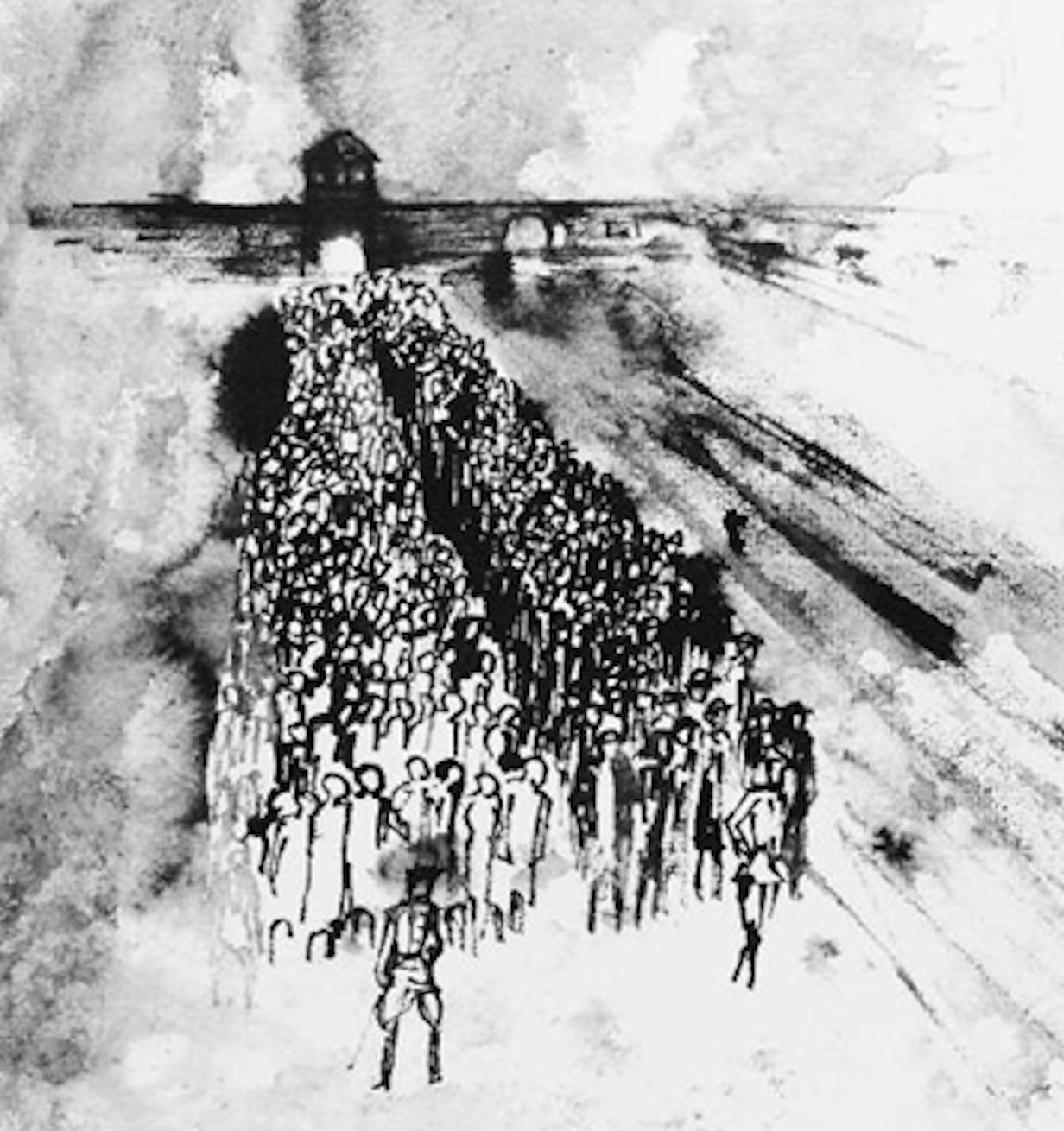
The TY module in Holocaust Studies is tailored to the amount of time teachers have available, as well as students' learning levels. It includes the opportunity to research and discuss the relevance of the Holocaust for students today. Teachers may have between 20-60 periods available for this programme in one school year and can adapt the content accordingly.
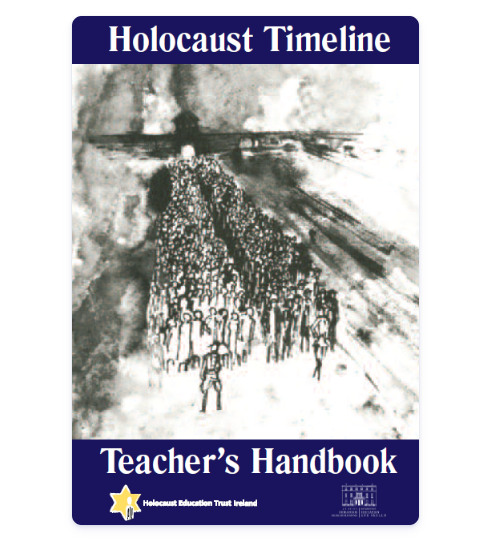
The Timeline Wallchart is designed to give a linear overview of the Nazi Holocaust in Europe, 1933–1945. It also prompts us to consider the consequences of the Holocaust and its relevance in our world today. The Handbook has suggestions for lessons, individual or classroom activities, special topics/lesson extenders and more.
We are also happy to send out physical copies of the wallcahrt and handbook, please email us if this is of interest.
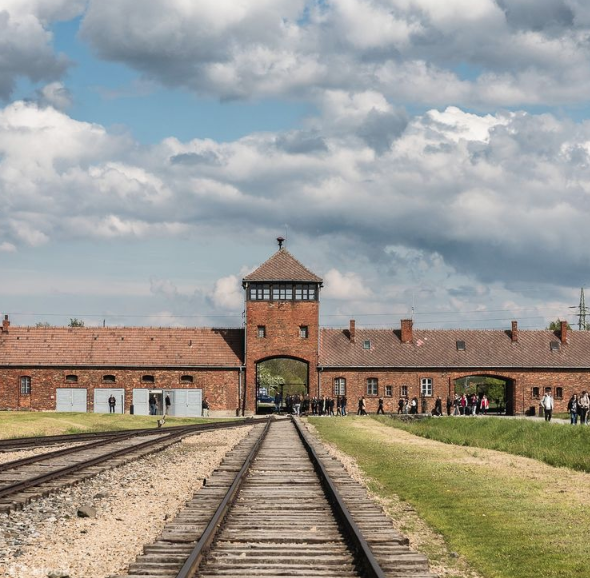
Holocaust Studies for Senior Students is a high-quality package of thirteen lessons covering the most important topics of the Holocaust, free to download and available in hard copy. The course spans pre-war Jewish life, the rise of antisemitism, ghettoisation, deportation, life in the camps, resistance, rescue, and the aftermath, touching on other genocides before closing with student reflection. Each lesson pairs background information with primary sources, survivor testimony, and a PowerPoint. Before beginning, teachers should first complete The Holocaust Narrative e-learning programme, which offers a general introduction to the subject and provides essential grounding for the sensitive material ahead.
You can register to complete the E-Learning programme here: https://docs.google.com/forms/d/e/1FAIpQLSeQ0gIs8LQkjwD1vH1bl0Nrn4NifSmqwM9CZc1Ovsjj9U5ofA/viewform
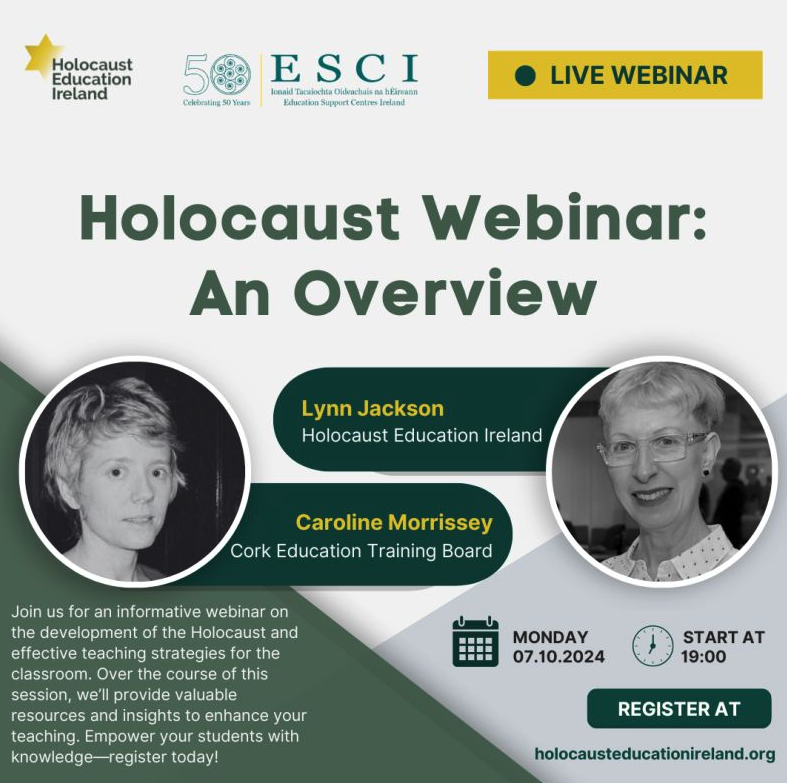
The Holocaust Webinar: An Overview
A 90-minute online presentation providing participants with an overviw of the development of the holocaust before, during and after the second world war. It assists teachers who are approaching teaching about the holocaust for the first time, or as a refresher for teachers who are already familiar with the subject. Hei provides comprehensive resources to teachers.
Holocaust Narrative E-Learning Programme
The Holocaust Narrative is a three-part e-learning course. Part One provides an overview of the course along with a general introduction to the Holocaust, exploring the diversity of Jewish life in pre-war Europe and the implications of the Nazis' rise to power, and introduces participants to the various forms of persecution experienced by Jewish people before the Second World War. Part Two details the experience of life during the Holocaust, covering the forced identification and segregation of Jewish people, life in the ghettos, the significance of the Einsatzgruppen (killing squads), and the consequences of the Wannsee Conference. Part Three covers the end of the Second World War and the difficulties faced by Jewish people during this time. qub

